
Flock off
A quick history of American surveillance, what Maine's been doing about it

Communities across the country have been battling the sudden national proliferation of flock cameras. For my “Racisms” column in this June’s edition of The Bollard I wrote about the beginnings of surveillance in the United States and how it’s now effecting Maine. Here’s the column with an added update at the end and finally, some good news!
During slavery, a piece of paper was often issued granting an enslaved person permission to move around designated locations. This was called a slave pass, and at any time, any white person could demand a Black person present one. If one wasn’t presented — or was thought to be forged — the sheriff would be called and the Black person would be jailed. If no enslaver came to get them, they would be sold. Free Black people, obviously unable to produce evidence of being enslaved, were victimized by this scheme all the time.
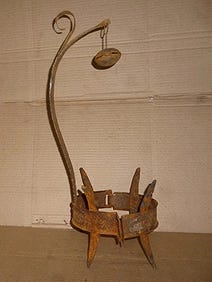
Some places, like Charleston, South Carolina, would forgo the paper pass, instead forcing all Black people to wear metal badges designating their status: “free,” “servant,” etc. Even worse, if you go to any slavery museum anywhere in the country, you’re likely to see large metal torture collars equipped with bells, notifying anyone within earshot of the wearer’s presence.
This brutal scrutiny was accompanied by slave patrols, always on the lookout for Black people — escaped, free or otherwise — to capture and return or sell into slavery. The first official slave patrols in the U.S. were established in South Carolina in 1704 and became our country’s first organized police force.
Created to enforce the wrong of slavery and prevent the right of freedom, all of this was the beginning of mass surveillance in America. And it’s why so many Black people roll our eyes when white people dismiss governmental or corporate eavesdropping because, “I’m not doing anything wrong.”
Also, it’s an obvious straight line from the beginning of mass surveillance to over-policed Black neighborhoods, the disproportionate murders of Black people by police and disproportionately Black prison populations. And if you have any doubts about that inequity, let’s not forget Black people are also falsely convicted disproportionately. According to the National Registry of Exonerations, innocent Black people are 7.5 times more likely than innocent white people to be falsely convicted of murder and roughly 19 times more likely to be falsely convicted of drug crimes.
Surveillance in the form of wiretapping became a common tool for policing poor white people during prohibition in the 1920s. Corporations started wiretapping union organizers in the 1930s. If you want to abuse a mass of regular people just trying to live their lives, there’s really no tool quite like a surveillance tool, which is why so many regular people nationwide are organizing against Automated License Plate Reader (ALPR) cameras.
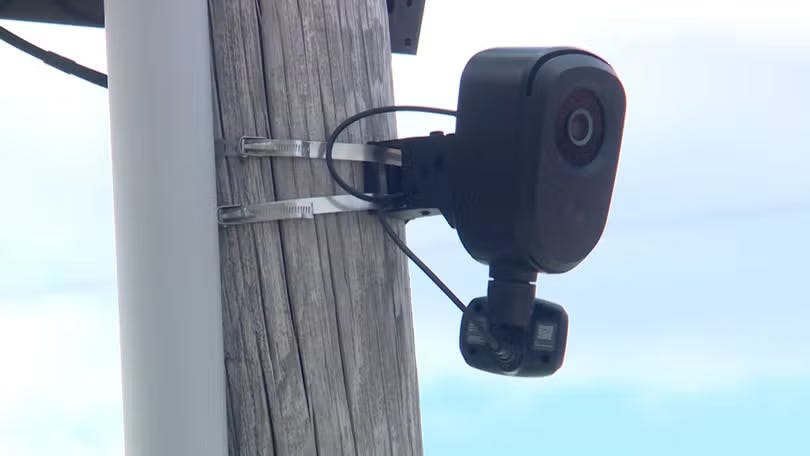
If you’re unfamiliar, ALPRs are primarily made by Flock Safety, a company with over 280,000 AI-integrated cameras and audio devices capable of tracking you through any phone app that sells your location. Flock can also track you in real time not just by your license plate, but also by using descriptors like your clothes and your likeness. Law enforcement can access this technology and its database without a warrant.
Of course, when it comes to reading actual license plates, ALPRs aren’t very accurate. False reads have led to countless incidents with police who are all too happy to neglect their investigative duties. Like the 2024 incident when a Toledo, Ohio police officer blindly followed an ALPR misread. I say blindly because not only was the license plate number wrong, it also belonged to a tan Chevrolet Malibu, not the red Dodge pickup he’d pulled over. The cop escalated the stop, accusing the driver, a Black man named Brandon Upchurch, of stealing his own car. The cop then mauled Upchurch with a police dog.
And then there’s the problem of police abusing ALPRs. Like the former Sandy Spring, Georgia police sergeant fired for allegedly using Flock cameras to commit corporate espionage. Or that time when a Texas sheriff claimed to have used the Flock database for a missing person case, but it turned out he was investigating a woman for having an abortion. And then there’s the nearly 20 times police have been caught using ALPRs to stalk women. The list of stalkers includes police chiefs in Georgia and Kansas — proof this kind of abuse goes all the way to the top.
As of this writing, the city of South Portland operates seven Flock Safety ALPRs, capturing between 100,000 and 150,000 images a day. No South Portland police have been caught abusing ALPRs yet. But given the recent uncovering of secret back-channel communications between ICE and South Portland police, it may just be a matter of time. For more information on South Portlanders’ efforts to rid their community of ALPRs, follow noflockforsopo on Instagram.
*UPDATE*
On June 12, Maine Public reported:
The city of South Portland will stop using Flock cameras, which use artificial intelligence to scan and log license plate information on public roadways.
At a meeting Thursday night, the city council voted 5-2 to disable them.
This incredible victory shows the power we can still wield when we come together as a community. As corny as that admittedly sounds, in a time when we’re made to feel so completely powerless, victories like this inspire. Fight the good fight. Win the good fight.