
Gerald E. Talbot
"The Maine Black"

Everyone in my Gorham, Maine high school freshman English class had to write a seven-page paper. The idea of seven pages felt like 700, but at least we all got to choose our individual topics.
I chose the assassination of Malcolm X.
Of course, the problem was the internet wasn’t what it is today and local libraries were limited on the subject. Research was going to be tough, but my teacher, Ms. Ray, had an idea. She knew about a guy.
So, one day after school, Ms. Ray drove me out to a house in Portland. We knocked on the door and I was introduced to a man named Gerald E. Talbot.
He told me to call him Gerry and welcomed me into his home where I was immediately comforted by the scent of old books.
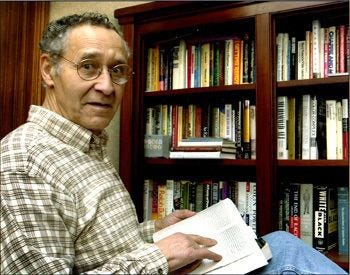
We sat down to talk and Gerry seemed a little puzzled that we hadn’t met before. It didn’t seem strange to me, but I had no idea who he was, let alone the size and scope of community around him.
He asked me about my family history in Gorham. I explained I didn’t have any, that I was living in a foster home. And unlike pretty much anyone else I’d met up to that point, Gerry reacted without pity.
Instead, he told me about his family in a way that somehow made me feel less alone. He just spoke with a natural kindness, effortlessly generous with his time and attention at a moment when I had no idea how desperately I needed it. But he knew.
Gerry was also shockingly generous with his resources, because I left his home that day with a copy of Malcolm X’s FBI file and Betty Shabazz’s home phone number.
Gerald E. Talbot passed away over the weekend. He was 94. Gerry was a pioneer, a champion, a man of hard-fought enduring legacy and a personal hero. If you’re unfamiliar with his work, the following is something I wrote about him for The Bollard in 2018 to start you on your journey.
Rest in Power, Gerry. You left the world so much better than you found it.
The Maine Black
So, I’m digging through the New York Times archives and I find this article from May 28, 1977. It catches my eye for a couple reasons. The first is that it was published almost 41 years to the day I read it. The second is that the article is headlined, “Maine Black Wins Place Names Battle.”
“Maine Black”? Are they referring to a specific person? Was there only one of us here in 1977? And was that person officially designated The Maine Black?
Also, “Place Names Battle”? What is that, how do you win such a battle, and was the entire world this shiftlessly ragtag in the 1970s?
The article actually does answer all of those questions.
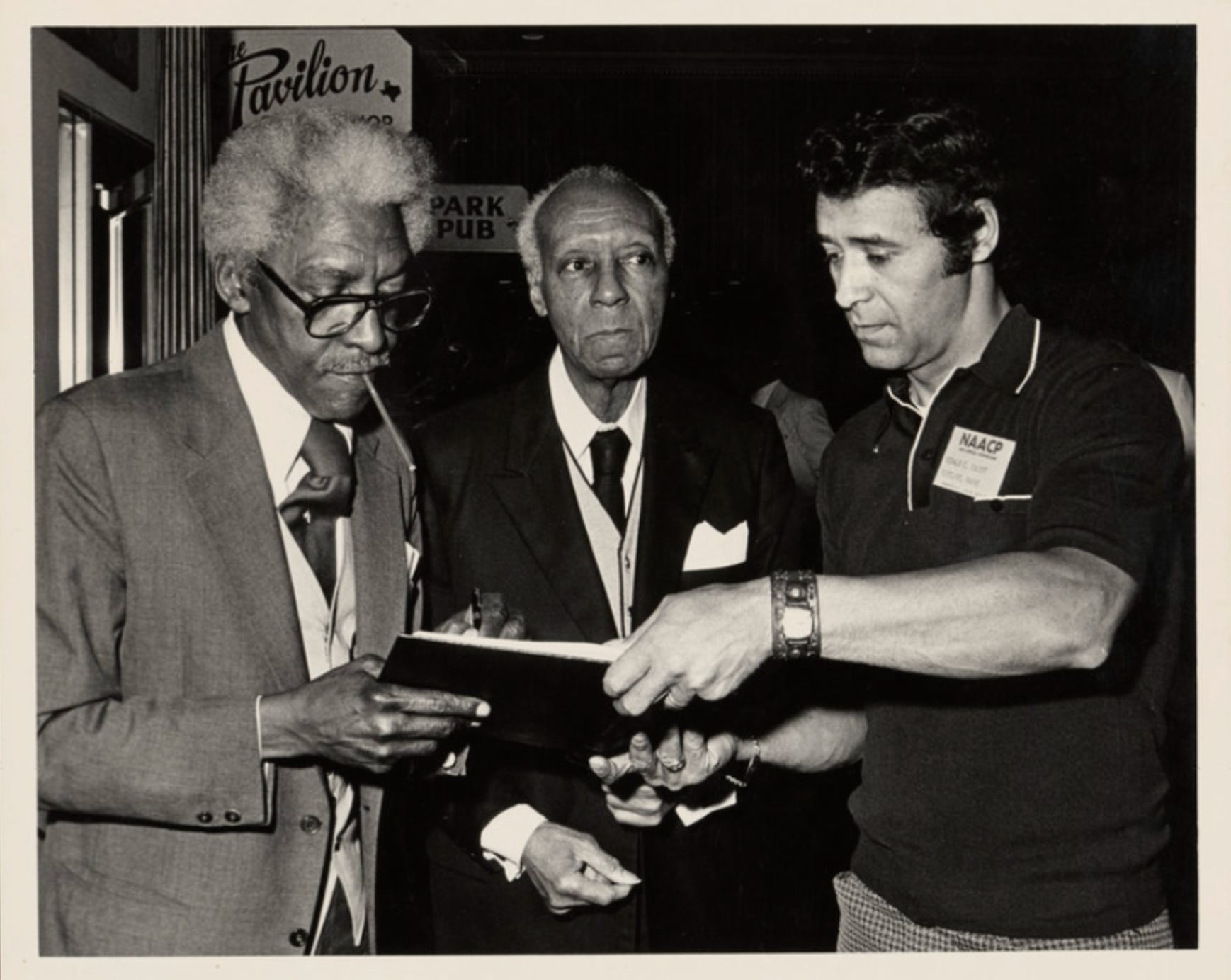
The “Maine Black” was Rep. Gerald E. Talbot, the first black man elected to the Maine House of Representatives. Or, as the article describes him, “the lone black in the Maine legislature.” That description makes it seem like Talbot was some sort of masked hero. Like, “Who could possibly face down the forces of evil in the Place Names Battle? I know! The Looooone Blaaaaack!”
And just what was this “Place Names Battle” anyway? Well, it turns out there used to be a whole lot of place names in Maine with the word “nigger.” There was a Nigger Road and a Nigger Brook and a Nigger Hill and on and on. Rep. Talbot had sponsored a bill to remove those names, and he was serious about it. This bill was the result of a three-year effort to persuade government agencies with names like the Bureau of Mapping of the State Conservation Department and the United States Board of Geographical Names to remove the slur. He didn’t beat around the bush when talking about it, either. From the Times article:
“In debate last week, Mr. Talbot told colleagues: ‘No one in this body has been brought up under that name and still carries the scar of that name. My children still grow up under that name. It’s derogatory to me, my children and to my relatives.’”
Turns out there was a reason these places were given that name. In April of 2013, Rep. Craig Hickman, of Winthrop — at the time, another “Lone Black” — spoke to the Legislature. “I sat down at a bar in my town of Winthrop and the gentleman next to me said, ‘Did you know that the hill over there used to be called Nigger Hill?’ I said, ‘I did not.’ I said, ‘Why?’ He said, ‘because the Underground Railroad ran through here.’”
Ain’t that some shit? Just for a moment, imagine it’s 1855. You’re enslaved. Your life is not your own. At the whim of your owner you could be beaten or raped or killed, and anyone with the power to stop it thought you deserved it. Somehow, you develop the courage to risk everything. Maybe you’ve got a plan or maybe you got lucky enough to meet up with Harriet Tubman or another Underground Railroad conductor. Either way, you decide to run. You go north. You have to keep moving through the treacherous terrain and into the deadly cold. You risk starvation and being killed and eaten by animals. You risk being caught, and if you’re caught you’ll be jailed and/or branded and/or sold back into slavery and/or killed. It’s against the law for anyone to help you, even in the north. You are not seen as a person who has escaped an existence defined by torture. You are seen as both stolen property and the thief. True freedom won’t be attained until you reach Canada. And it’s been so cold for so long that you think maybe you’re already there! You ask someone where you are and they respond, “Nigger Hill.” Now you’re unsure if you’ve even escaped Mississippi.
Anyway, Hickman continued: “So in my town, if you were born when that part of my town was called that, that town was actually on your birth certificate. It said that you were born in ‘Nigger Hill, Winthrop, Kennebec County, Maine.’”
Ain’t that some shit? Imagine that’s what you write on every job application and tax form.
Thanks to former Rep. Gerald Talbot, no one has to write that these days. Personally, I’m very happy I don’t have to see a street sign that says Nigger Road.
It may seem like a simple or even antiquated thing now, but it’s only because of racial representation that we can look back at how backwards we were – just over 40 years ago. And in this time of political regression, it’s only through continued representation by people like Rep. Hickman and Rep. Rachel Talbot Ross (Gerald’s daughter, and the first black woman to serve in Maine’s Legislature) that we keep those backwards times at bay.
First. When I arrived in Maine in September 1988, I was hoping to find a job that operationalized what I had been teaching for the last 5 years at Southern New Hampshire University (nee New Hampshire College). Various public/social policy classes or how to evaluate or write them or advocate for one. I was in Portland for about a month before I met Gerry and after a couple of gatherings he took me up to the State House to meet a couple of folks who might be able to help me with my quest. I have known and had many meals at his home and eventually the homes of his daughters since. Second, the loss Black REPRESENTATION is one of the major reasons for the anger at Louisiana and Tennessee. Which white representative would ever have had a thought regarding the nastiness of Nigger Hill's name?! Rest in Power one of Maine's most Influential Elders.